
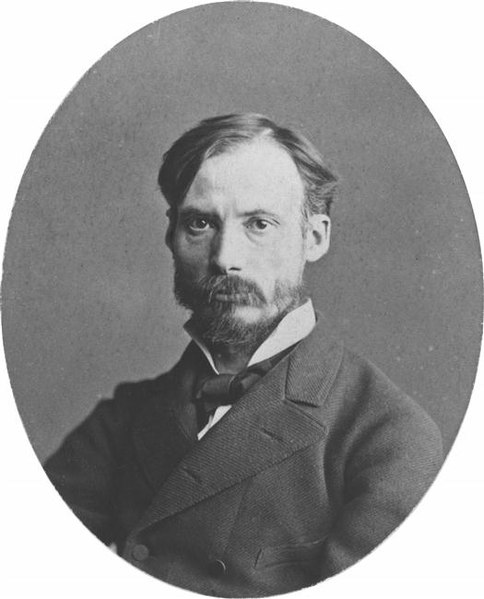
Pierre-Auguste Renoir (1841-1919) was one of the leading painters of the French Impressionist movement.
He grew up in Paris, in close proximity to the Louvre. Although the young Renoir had a natural talent for drawing, he exhibited a greater skill for singing. His musical talent was nurtured by his teacher, the composer Charles Gounod. However, due to the family’s financial difficulties, Renoir discontinued his music lessons and left school at the age of thirteen to become an apprentice at a porcelain factory.
Although Renoir excelled at porcelain work, he grew bored with it and frequently escaped to the galleries of the Louvre. The owner of the factory recognized his apprentice’s talent and admitted it to Renoir’s family. Soon, Renoir started taking art lessons to prepare for entry into the famous Ecole des Beaux Arts.
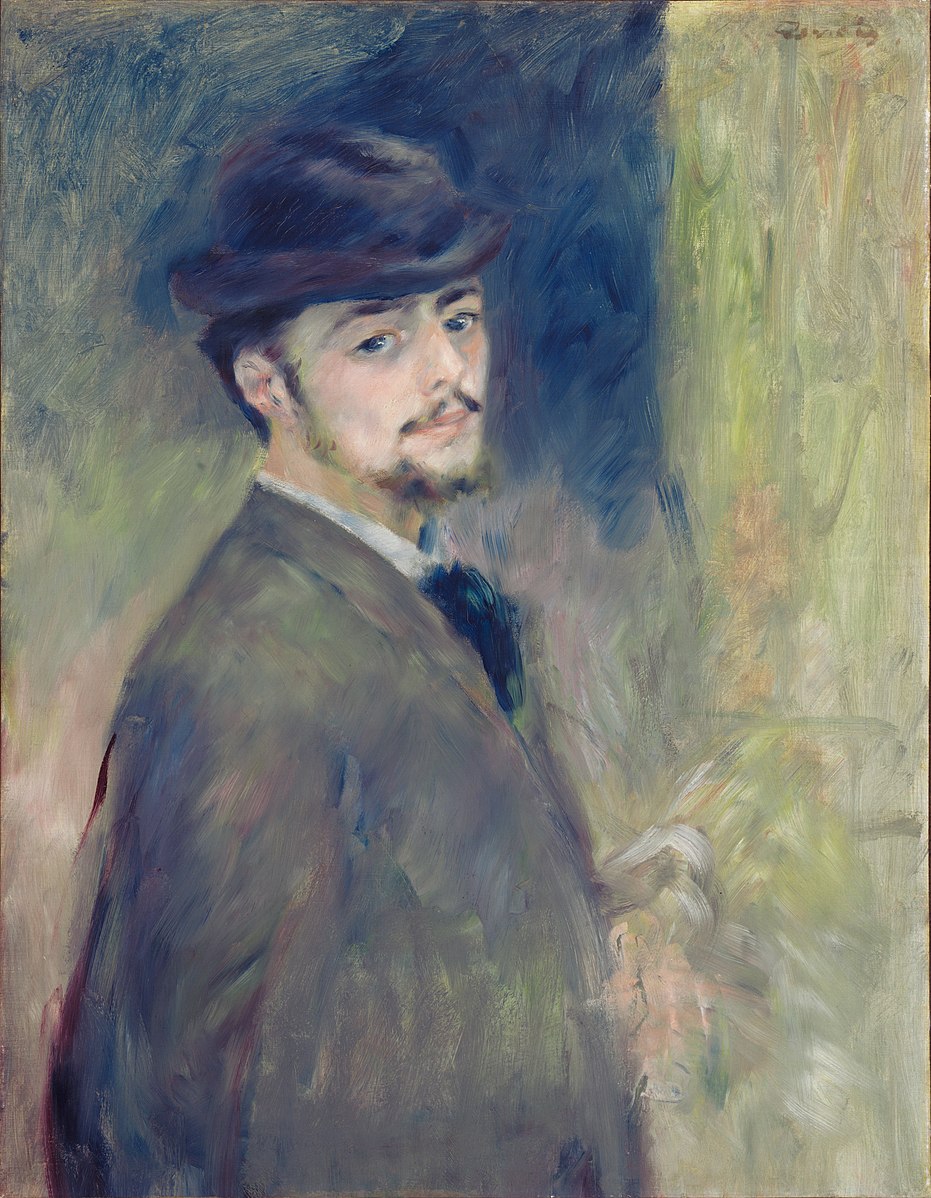
In 1862, he began studying art under Charles Gleyre in Paris. There he met other young painters including Claude Monet. At times during the 1860s, he did not have enough money to buy paint. Although Renoir first started exhibiting paintings at the Paris Salon in 1864, recognition was slow in coming.
In the late 1860s, through the practice of painting light and water en plein air (outdoors), he and his friend Claude Monet discovered that the color of shadows is not brown or black, but the reflected color of the objects surrounding them, an effect known today as diffuse reflection.
Renoir was inspired by the style and subject matter of previous modern painters Camille Pissarro and Édouard Manet. After a series of rejections by the Salon juries, he joined forces with Monet, Sisley, Pissarro, and several other artists to mount the first Impressionist exhibition in April 1874, in which Renoir displayed six paintings. Although the critical response to the exhibition was largely unfavorable, Renoir’s work was comparatively well received.
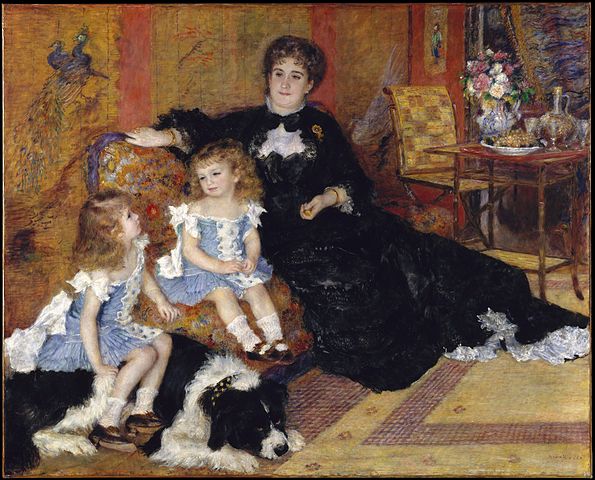
Hoping to earn a livelihood by attracting portrait commissions, Renoir displayed mostly portraits at the second Impressionist exhibition in 1876. He contributed a more diverse range of paintings the next year when the group presented its third exhibition. Renoir did not exhibit in the fourth or fifth Impressionist exhibitions, and instead resumed submitting his works to the Salon. By the end of the 1870s, particularly after the success of his painting Mme Charpentier and her Children (1878) at the Salon of 1879, Renoir was a successful and fashionable painter.

In 1881, he traveled to Madrid to see the work of Diego Velázquez. Following that, he traveled to Italy to see Titian’s masterpieces in Florence and the paintings of Raphael in Rome. It was that trip to Italy when he saw the works by Raphael, Leonardo da Vinci, Titian, and other Renaissance masters, that convinced him that Impressionism was the wrong path for him.
On January 15,1882, Renoir met the composer Richard Wagner at his home in Palermo, Sicily. Renoir painted Wagner’s portrait in just thirty-five minutes. That same year, he contracted pneumonia which permanently damaged his respiratory system.
In 1883, Renoir spent the summer in Guernsey, one of the islands in the English Channel with a varied landscape of beaches, cliffs, and bays, where he created fifteen paintings in little over a month. By the mid-1880s, however, Renoir had broken with the Impressionists. For the next several years he painted in a more realistic style in an attempt to return to classicism.

While living and working in Montmartre, Renoir employed Suzanne Valadon as a model, who posed for him (The Large Bathers, 1884–1887) and many of his fellow painters; during that time she studied their techniques and eventually became one of the leading painters of the day.
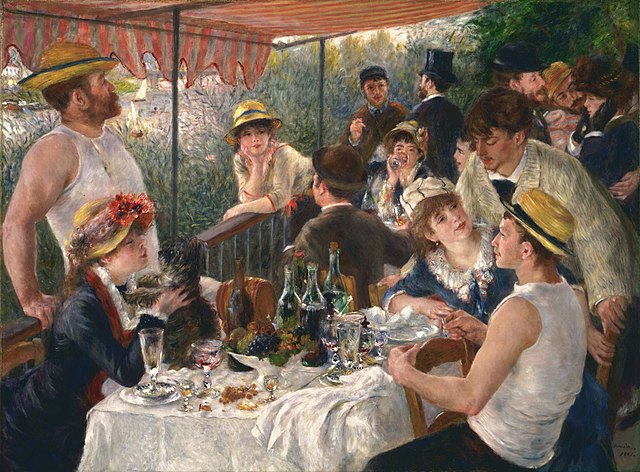
In 1890, Renoir married Aline Victorine Charigot, a dressmaker twenty years younger than he who, along with a number of the artist’s friends, had already served as a model for Luncheon of the Boating Party (she is the woman on the left playing with the dog), and with whom he had already had a child, Pierre, in 1885. After marrying, Renoir painted many scenes of his wife and daily family life including their children and their nurse. The Renoirs had three sons: Pierre (1885–1952), who became a stage and film actor; Jean (1894–1979), who became a filmmaker of note; and Claude (1901–1969), who became a ceramic artist.
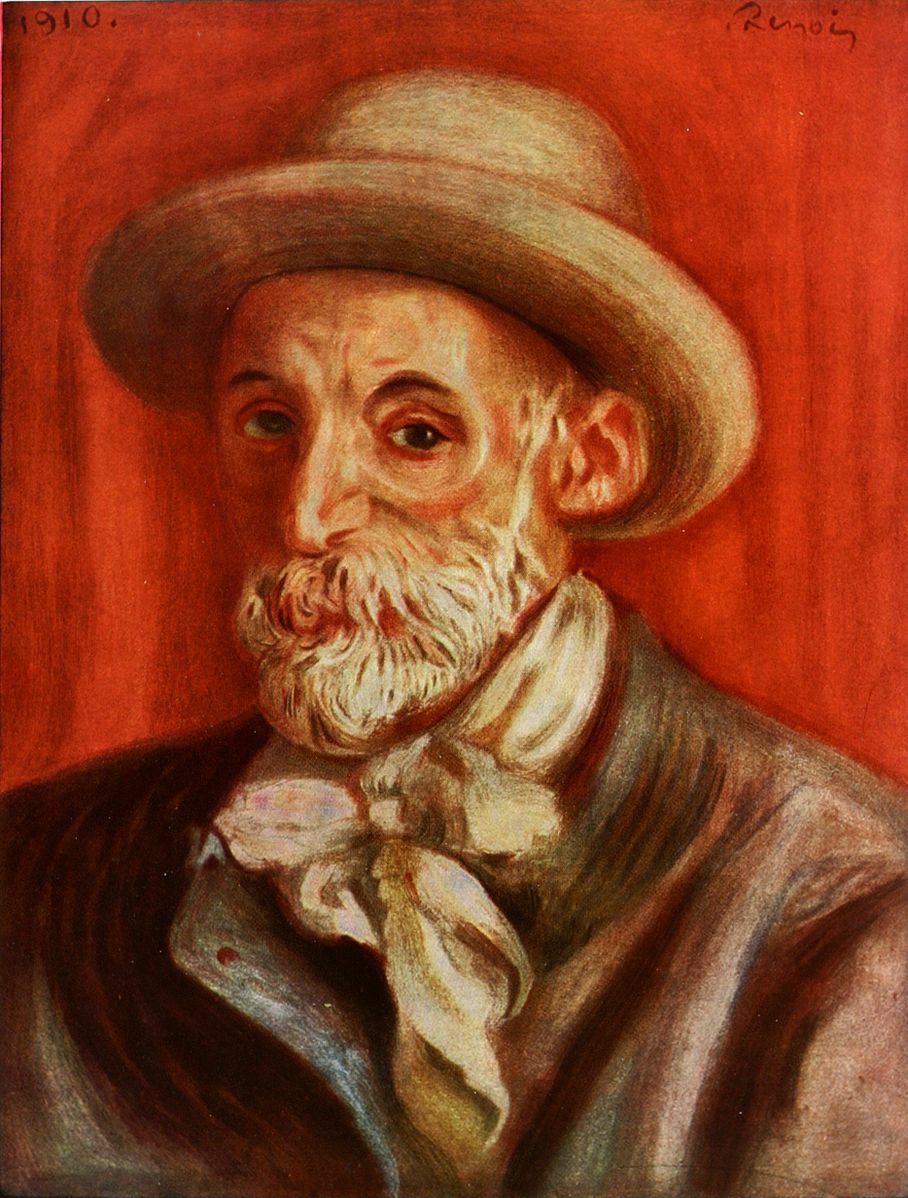
Around 1892, Renoir developed rheumatoid arthritis. In 1907, he moved to the warmer climate of “Les Collettes”, a farm at the village of Cagnes-sur-Mer, Provence-Alpes-Côte d’Azur, close to the Mediterranean coast.
Renoir painted during the last twenty years of his life even after his arthritis severely limited his mobility. He developed progressive deformities in his hands and ankylosis of his right shoulder, requiring him to change his painting technique. Renoir remained able to grasp a brush, although he required an assistant to place it in his hand.
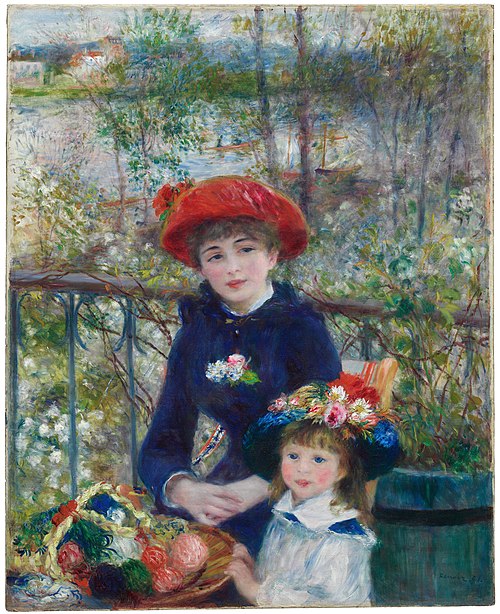
Renoir’s paintings are notable for their vibrant light and saturated color, most often focusing on people in intimate and candid compositions. The female nude was one of his primary subjects.
His initial paintings show the influence of the colorism of Eugène Delacroix. He also admired the realism of Édouard Manet, and his early work resembles his in the use of black as a color. Renoir admired Edgar Degas’ sense of movement.

A prolific artist, he created several thousand paintings. The warm sensuality of Renoir’s style made his paintings some of the most well-known and frequently reproduced works in the history of art. The single largest collection of his works—181 paintings in all—is at the Barnes Foundation, in Philadelphia.
Click on the pictures below to enlarge and show titles.



Material for this article came from Wikipedia.

 Allison Boley
 Carol Boley
 dgood648
 Joy
Joy Andrea R Huelsenbeck
 Betty Mason Arthurs
 Linda Carlblom
 Peggy Levesque
 tuesdayschildren100
 Judy Robertson
 Doing Life Together