


Tap Your Feet to New Orleans Jazz
At about the 0:37 mark, there’s a couple dancing in the background. Pure joy.
Video of the Day: Violin Prodigy
This is Joshua Tan at age 10. You can see more of Josh on his YouTube Channel.
Nursery Rhymes are Terrific!
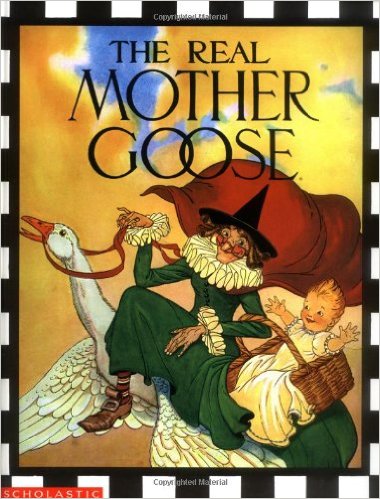
I was born about seven months after my parents emigrated to the United States from Germany. One of the many things my mother did right (probably at the suggestion of the neighborhood moms) was read to me every day. This practice helped her strengthen her English language skills and also introduce me to what would become my primary tongue.
One of the books she read over and over was Mother Goose. I heard it so many times that I knew it by heart. She capitalized on my memorization by running the tip of her finger under the words as she read, so that even as a toddler I connected the words I heard to the visual representation of them, and began to recognize them in different contexts.
When my children were little, I also read to them twice a day, before naps and bedtime, and Mother Goose rhymes were a staple. (So were Dr. Seuss books.) All five were readers before they entered kindergarten.
During my first elementary general music teaching career (right out of college in the 1970s), I often used nursery rhymes in musical exercises to develop rhythmic and melodic awareness. Most of my students were familiar with them. However, when I returned to the classroom (after a 27-year break during which I raised my children), few students knew of Mary, Mary quite contrary or Humpty Dumpty. I know the rhymes are from a different age, but why has Mother Goose fallen out of the childhood canon? Nursery rhymes are a tradition we cannot afford to lose.

Why nursery rhymes are important:
- They introduce the concept of story.
- They encourage listening skills and comprehension.
- They are easy to memorize. The brain subconsciously recognizes patterns in the rhymes and the rhythms.
- They stimulate language and vocabulary acquisition.
- They introduce numbers and counting. (One, two, three, four, five, once I caught a fish alive. Six, seven, eight, nine, ten, then I let it go again.)
- They often suggest hand or body motions that boost motor skills. (Pat-a-cake, pat-a-cake, baker’s man; or Ring around the rosie, a pocket full of posie, ashes, ashes, we all fall down.)
- Many nursery rhymes are associated with melodies (Twinkle, Twinkle, Little Star; Here We Go ‘Round the Mulberry Bush; Hey Diddle, Diddle, the Cat and the Fiddle), or are easy to make into a song.
To learn more about nursery rhymes, read further:
- The Benefits of Nursery Rhymes in Your Child’s Development
- The Importance of Nursery Rhymes and Songs
- Rhymers are Readers
- Impact of Rhymes on Preschool Development
What? You don’t know any nursery rhymes? Bless your heart—here are 50 rhymes you can start learning today!
Now it’s your turn. Did you grow up reciting Mother Goose rhymes? Did you read or teach them to your children? Do you think they should remain part of standard children’s literature? Or could you suggest books of more modern rhymes (maybe the poetry of Shel Silverstein, for example) that would make suitable updates? Share in the comments below.
Posted in Brain research, Nursery rhymes, Parenting, Reading
Tagged Children's books, Early education, Reading to children
1 Comment
Wisdom from Leonardo da Vinci

Knowing is not enough; we must apply. Being willing is not enough; we must do.
~Leonardo da Vinci


Anti-Abortion Activists, Your Job Is Just Beginning

For the record, I am anti-abortion. I believe life starts at the moment of conception and that society has a responsibility to protect that life.
I just don’t think we need to write laws that prevent abortion.
Does that seem contradictory? Let me explain my logic.
We live in a society that views sex as a recreational activity with no limitations. Just turn on a television set if you don’t know what I mean. The idea of abstinence is shot down as ridiculous. I don’t agree that without abortion women are being forced to carry babies (except in the case of rape). If you consent to engage in an activity that is known to cause children, you shouldn’t be surprised if you become pregnant. Both men and women who don’t want to immediately become parents should practice birth control. It’s widely available and free in many places, although it has been known to fail occasionally.
Although some women’s reasons for having abortions seem frivolous (it’s a girl and we wanted a boy), many feel they have no choice. The timing of the pregnancy may mean financial hardship or lost opportunity. Let’s face it, having a little person depend on you for the next 18+ years means a large investment of time, energy, and money.
I hate to say it, but in the almost 50 years since Roe vs. Wade, abortion opponents have done very little to lessen the economic burden of raising children in this country. I have the horrible feeling that the people who are celebrating in the streets today are congratulating themselves that they got their cause through the Supreme Court without giving thought to what this will mean to women who find themselves inconveniently pregnant.
It’s not just their problem, it’s ours.

If we do nothing, more children in this country will grow up in poverty. The divide between the few rich and the many who are not will just grow.
There will be a baby boom, requiring better access to prenatal care and more obstetricians and birth centers. We will need more schools and better funding for them, and more teachers and other staffers who need to be paid a decent salary (which we have been failing to do in many places in the US, especially in my own state of Arizona). We will need better access to child care with good facilities and many more qualified caretakers, so that parents can afford to work. We will need more pediatricians and children’s hospitals. These need to be in place almost immediately. Oh, and it will cost money. Thank you so much, anti-abortion activists, for raising our tax bills.
Not that the government can or will provide all these things.
I am reminded of the African proverb: it takes a village to raise a child.
So I am asking you anti-abortion activists, do you just want everybody else to live by your high ethical standards, or do you really care about women and children and struggling families? Because you have an obligation to be part of the solution. Your activism is just getting started.
What can you do? Give. Give your money and yourself.
- Give to organizations that help families in distress and need. In Arizona (and maybe in your state, too—check your state’s revenue department website to find out) there are state tax credits for donations to organizations like pregnancy centers, food banks, foster care and adoption support, public and private schools. They will cost you nothing (unless you exceed their limits, and shouldn’t you, since you care so much about the babies?), so you have no excuse not to take advantage of them.
- If you are retired, why not befriend a neighbor with kids? Offer to care for their children during the period after school until the parents come home from work. Make them a snack. Help them with their homework. Play board games with them. You will be so blessed.
- Plant a garden so that you can share your tomatoes, zucchinis, and flowers with families who are struggling to put food on the table. I’ll bet you can find someone in your own neighborhood who will really appreciate it.
- When your own kids outgrow their clothes, look for someone who can use them. When our own children were growing up, people often helped us in this way. It was a lifesaver.
 Allison Boley
 Carol Boley
 dgood648
 Joy
Joy Andrea R Huelsenbeck
 Betty Mason Arthurs
 Linda Carlblom
 Peggy Levesque
 tuesdayschildren100
 Judy Robertson
 Doing Life Together