 This post started as a response to Jeff Goin’s 500 Word Challenge. The writing prompt was to explain how to do something, step by step.
Although I am not a piano teacher, I know a lot about practicing the piano. I have been playing piano on and off for 54 years, and I love/hate practicing. Many music students regard it as a necessary evil. However, to learn what scientists say about how daily practice and learning to play an instrument benefits you, watch the video below:
To be a great musician (I confess I am not), practicing is a discipline you must cultivate. It is a way of life. The suggestions I give may be applicable to practicing other instruments as well. (For an excellent treatise on the discipline of practicing the guitar, also applicable to other instruments, read Practicing: A Musician’s Return to Music, by Glenn Kurtz.) 
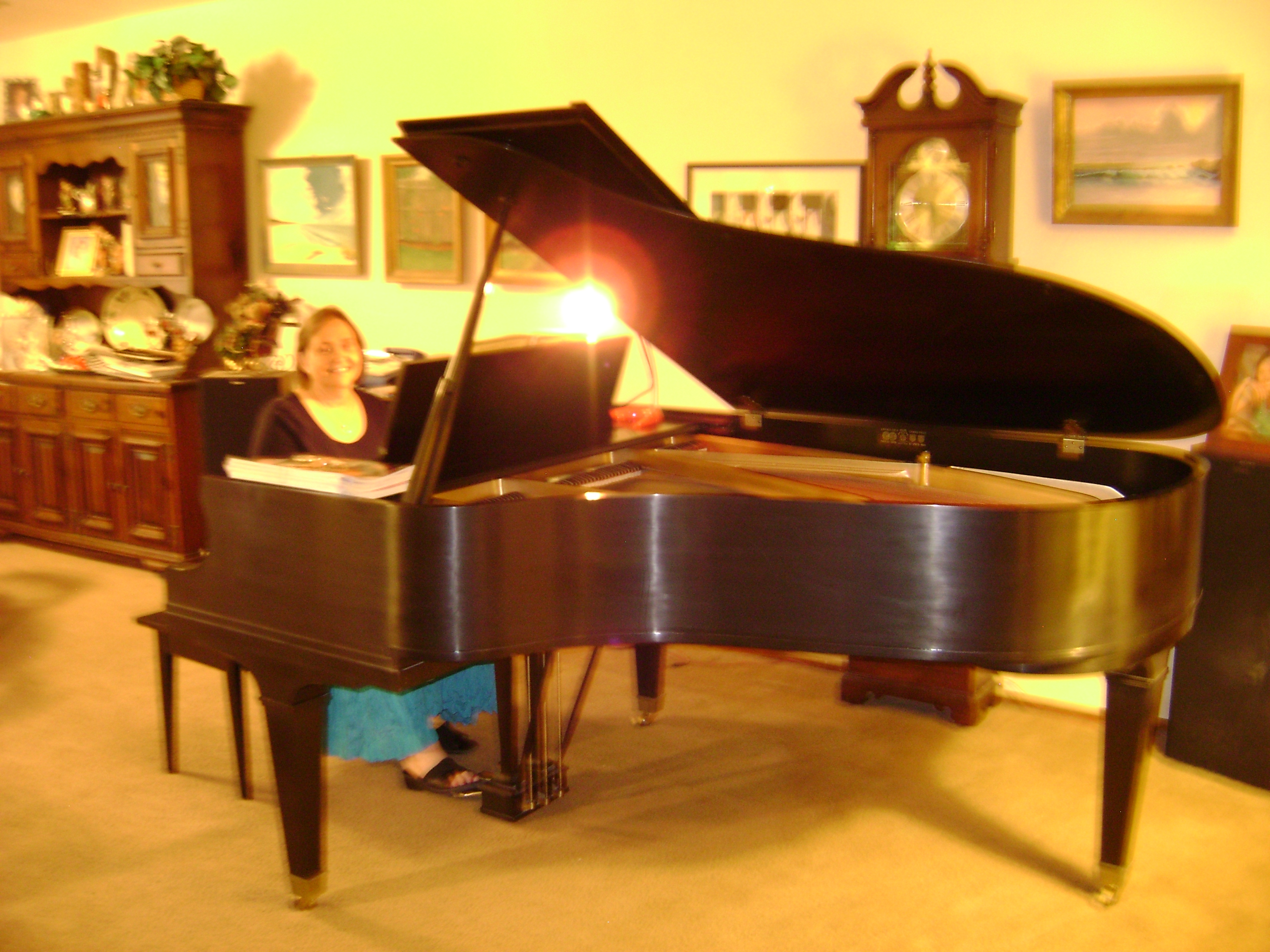
As a child, I dreaded practicing. Even as a music major (piano minor), even though I knew intellectually how critical practice is, I seldom practiced enough. My commitment to practice improved a few years ago when my husband and I bought a grand piano. It is such a pleasure to play that I now willingly practice almost every day—but that’s a topic for another post.
This article presupposes that you have some musical knowledge. I apologize if some of my terminology is unfamiliar to you.
If you are taking piano lessons, undoubtedly your teacher has assigned you some preparatory exercises, etudes (studies), and/or scales. Begin your daily practice time with these. Depending on your level of skill and commitment, you should spend anywhere from 10 to 60+ minutes of your practice on warm-ups. (The greater your skill and/or desire, the more time you will spend on warm-ups and on practice.)
Exercises
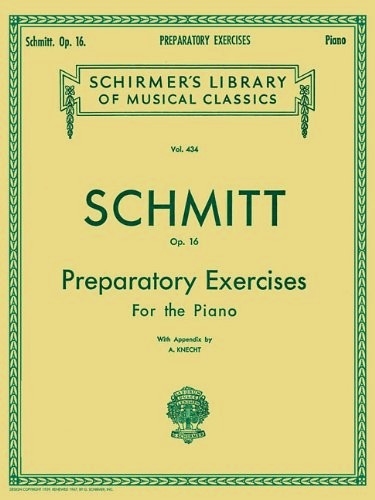 If you are studying on your own, I recommend Aloys Schmitt and C.L. Hanon as two composers whose preparatory exercises have been used for over a century. Any of their books would be worthwhile to work through. These exercises take common snippets of melody and repeat them so that the musician gains facility in the technique and fingering necessary to play them. And, yes, the repetition will strengthen arm and hand muscles you didn’t know you had, just as an athlete’s workout does. The Schmitt exercises are repeated in the same position; the Hanon exercises repeat the same sequence of intervals but progressively starting on the next higher or lower pitch.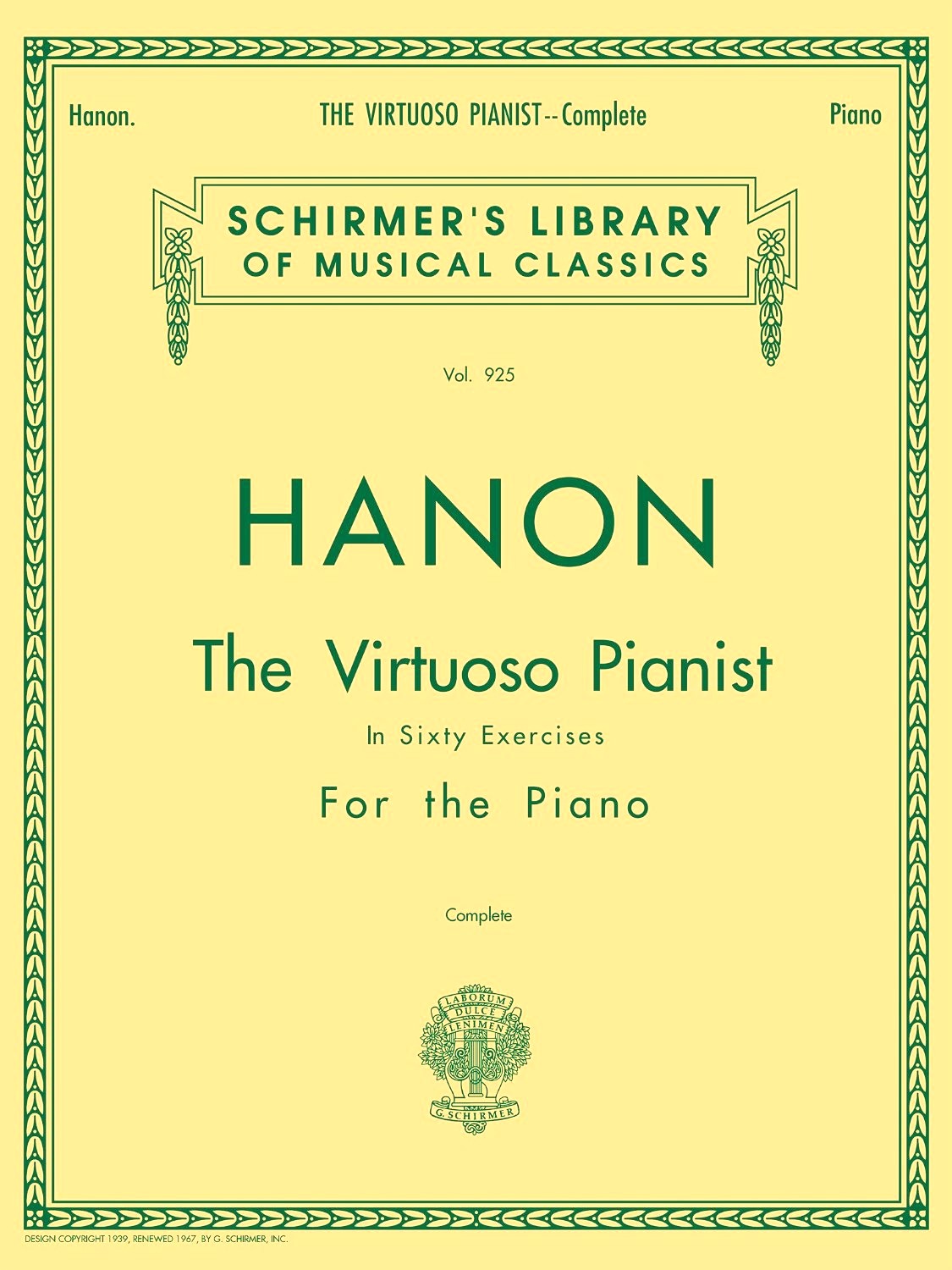
If you are just beginning to learn an exercise, practice with your dominant hand first, then with your less dominant hand, and then with both hands together. Start out slowly enough that you can play all notes correctly and with the specified fingers. Then, unless the exercise is specifically marked as staccato (detached), work on making it very legato (smooth and connected). Eventually, you should practice all sorts of attacks for each exercise—legato, marcato (accented), staccato, szfortzando (suddenly loud and then soft again), and different dynamic (volume) levels. When you can play the exercise smoothly, work on increasing speed. At first, practice each Schmitt exercise 20 times, each Hanon exercise 4 times. When you have mastered the exercise, you will review each exercise with fewer repetitions. Schmitt says it is of the utmost importance to play all the mastered exercises at least once every day. (Man, you could eventually spend your whole day just playing through your mastered exercises!) I recommend systematically reviewing all your exercises in a rotation that works for you.
Preparatory exercises are just one option for your practice warm-up. At a later date, I will post an entry about Etudes and Scales.
Did you find this post helpful? Is there something you would add to the practice of preparatory exercises? Post a comment below to join the conversation.

 Allison Boley
 Carol Boley
 dgood648
 Joy
Joy Andrea R Huelsenbeck
 Betty Mason Arthurs
 Linda Carlblom
 Peggy Levesque
 tuesdayschildren100
 Judy Robertson
 Doing Life Together
Beautiful, informative post, Andrea. Our kids’ piano teacher used the wonderful Hanon practice book.
I am what I am today because my mom started me in piano at age 5 AND made me practice…lol.
LikeLiked by 2 people
When I was in grade school, I had a friend who complained about having to practice piano. I would have traded places with her in a heartbeat. Many years later my husband bout me a player piano, which provided easy entertainment for the family. I decided now was my time to learn. Instead of going through the primer phases as I should have, I tackled The Sting first. That was probably a mistake, but my pride, months later when I finally mastered it, could have bust my buttons. Thanks for bringing that memory to mind, Andrea. Love the post.
LikeLiked by 1 person
The Sting is a very ambitious first piece! I would have talked you out of it if I had known you then.
LikeLike
Reblogged this on ARHtistic License.
LikeLike
Pingback: How to Practice the Piano: The Warm-Up, Part II—Etudes and Scales . . .by Andrea R Huelsenbeck | ARHtistic License
Pingback: How to Practice the Piano: Selecting Repertoire | ARHtistic License
Pingback: How to Practice the Piano: Learning Repertoire | ARHtistic License