
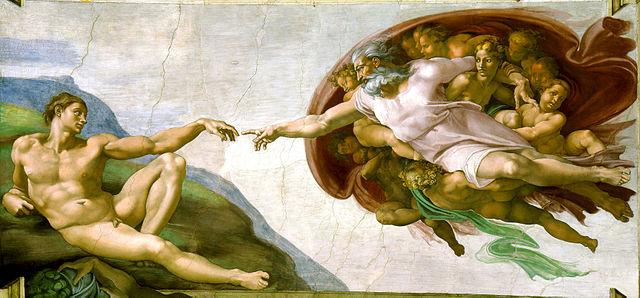
Treat yourself to reading this sermon by Nadia Bolz-Weber.
Treat yourself to reading this sermon by Nadia Bolz-Weber.
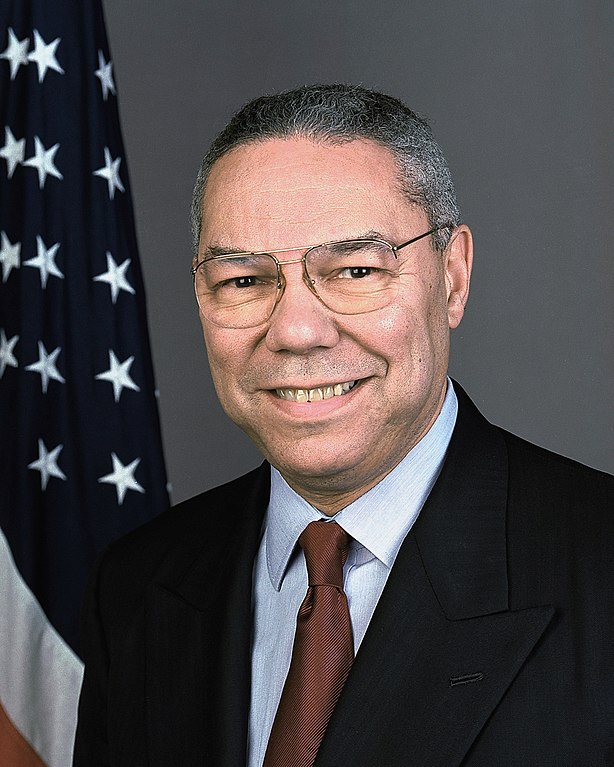
~ from My American Journey by Colin Powell with Joseph E. Persico

O God
when I am afraid
I will trust in You
I surrender my fear
believing that You are in control
You see me
You love me
You know best what I need

I lay my concerns at Your feet
I let go
and I’m enveloped by Your Presence
Your peace flowing like a river
transcending all understanding
You know best what I need
I love You
©ARHuelsenbeck
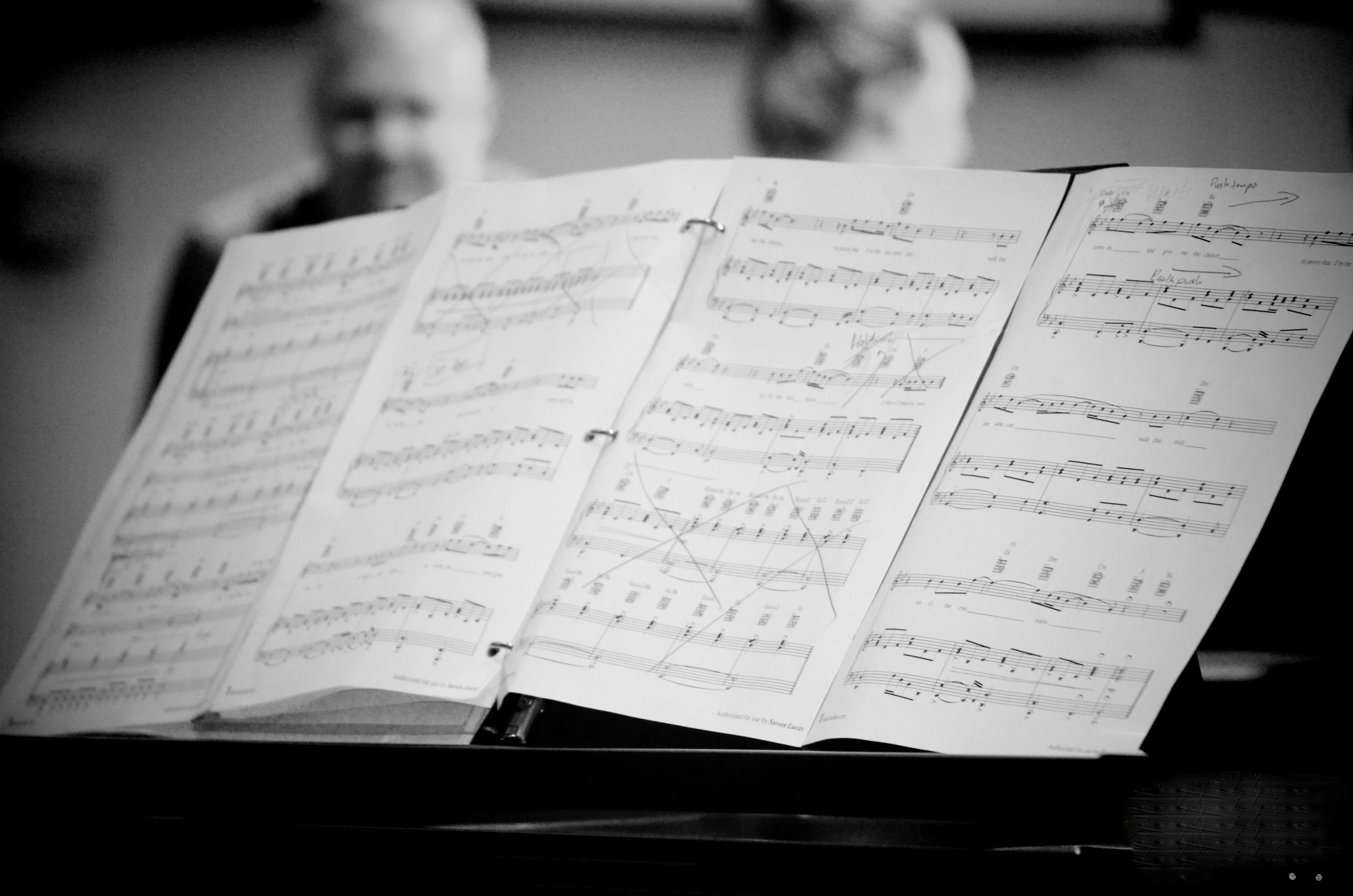
A couple of years ago, I found a short paper I wrote in grad school for the course Skills in Score Preparation.
I was a music education major. The scores in question were pieces of music, especially multi-instrument or multi-voice pieces for orchestra or ensembles or choruses; the score contains all the parts for each individual instrument and/or voice. The conductor or teacher would need to carefully study all parts of the piece before beginning to rehearse or teach the piece. The conductor/teacher would want to mark the score to remind himself of important points to cover; for example, entrances that would need his cueing, or changes in time signature or key signature.
Skills in Score Preparation was by far the most memorable, interesting, and helpful class I took during my Masters program at Trenton State College (now known as The College of New Jersey). I’ve forgotten the professor’s name, but he was passionate about good conducting and helping us to become better conductors. He was everything you’d want a professor to be: wise, skillful, an excellent communicator, kind, and encouraging.
I wrote the paper in the fall of 1975. I typed it on a typewriter on onionskin paper. The assignment was to list the steps I would take to prepare a score I might use in my career (in my case, in an elementary music classroom). I’m posting it here just in case it might be useful to any musicians who happen to be reading Doing Life Together today.
Steps in Score Preparation:
How to Prepare a Score
for Study in the General Music Class or for Performance by the Chorus
On the cover sheet of my paper, the professor wrote quite comprehensive work, which makes me happy even after 49 years.
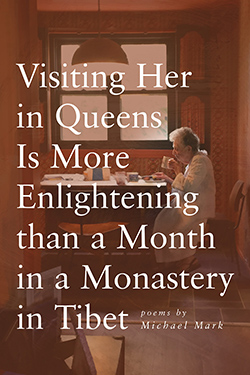
Visiting Her in Queens Is More Enlightening Than a Month in a Monastery in Tibet is a poetry chapbook (a small collection of poems). The poems center around the end of the poet’s mother’s life, including memories of the mother (Estelle) when she was younger, how she and her husband related to each other as they aged, and observing the strain of caregiving on his father.
As anyone knows who has witnessed the progression of Alzheimer’s, it is a cruel disease that robs the victim of her personality piece by piece, leaving a stranger in her place. The beauty of the poems in Visiting Her in Queens is that they convey with love the challenges of watching a loved one fade away. The poems capture the bitter-sweetness, the affection among the tears.
In the center of the book is a photograph—I’m not sure if it’s one picture cut in half, or two separate pictures that line up really well—of a couple whom I assume are the poet’s parents in middle age. The mother is doubled over with laughter; the father smiles at her. Their fondness for one another is palpable; they were married just short of 65 years.
My favorite poem in the book is “Losing My Parents in a Small CVS Drug Store” which describes his search with hilarity. One employee saw them reading greeting cards to one another. A customer saw them over by the adult diapers. A stock boy caught them in employees’ rest room, where they were admiring the hand soap pump. The surveillance camera caught them eating in the candy aisle. Finally the manager makes an announcement over the public address system: “Attention Michael’s parents—please report to checkout immediately without rushing too much. Your son trusts you and wants you to have your independence but he doesn’t want you to miss Jeopardy.”
Of course, not all the poems are funny. But they are touching. And they are varied. Some of the titles are “The Wish,” “Watching the Golden Gate Bridge Disappear,” “What My Father Heard the Rabbi Say at My Mother’s Funeral,” “Dancing with My Father at My Son’s Wedding,” and “Celebrating His 92nd Birthday the Year His Wife Dies.”
This book will be especially meaningful to senior citizens and to anyone who has been a caretaker. The Rattle Foundation sends out a different chapbook with each quarterly issue of their poetry journal. Copies of this book are also available on their website. It’s only $6.
Two and a half hours, but don’t let that scare you. It’s gorgeous, one of the most polished performances I’ve ever seen. You may want it playing in the background all day.
 Allison Boley
 Carol Boley
 dgood648
 Joy
Joy Andrea R Huelsenbeck
 Betty Mason Arthurs
 Linda Carlblom
 Peggy Levesque
 tuesdayschildren100
 Judy Robertson
 Doing Life Together