Nursery Rhymes are Terrific!

I was born about seven months after my parents emigrated to the United States from Germany. One of the many things my mother did right (probably at the suggestion of the neighborhood moms) was read to me every day. This practice helped her strengthen her English language skills and also introduce me to what would become my primary tongue.

One of the books she read over and over was Mother Goose. I heard it so many times that I knew it by heart. She capitalized on my memorization by running the tip of her finger under the words as she read, so that even as a toddler I connected the words I heard to the visual representation of them, and began to recognize them in different contexts.

When my children were little, I also read to them twice a day, before naps and bedtime, and Mother Goose rhymes were a staple. (So were Dr. Seuss books.) All five were readers before they entered kindergarten.

During my first elementary general music teaching career (right out of college in the 1970s), I often used nursery rhymes in musical exercises to develop rhythmic and melodic awareness. Most of my students were familiar with them. However, when I returned to the classroom (after a 27-year break during which I raised my children), few students knew of Mary, Mary quite contrary or Humpty Dumpty. I know the rhymes are from a different age, but why has Mother Goose fallen out of the childhood canon? Nursery rhymes are a tradition we cannot afford to lose.

Why nursery rhymes are important:

  • They introduce the concept of story.
  • They encourage listening skills and comprehension.
  • They are easy to memorize. The brain subconsciously recognizes patterns in the rhymes and the rhythms.
  • They stimulate language and vocabulary acquisition.
  • They introduce numbers and counting. (One, two, three, four, five, once I caught a fish alive. Six, seven, eight, nine, ten, then I let it go again.)
  • They often suggest hand or body motions that boost motor skills. (Pat-a-cake, pat-a-cake, baker’s man; or Ring around the rosie, a pocket full of posie, ashes, ashes, we all fall down.)
  • Many nursery rhymes are associated with melodies (Twinkle, Twinkle, Little Star; Here We Go ‘Round the Mulberry Bush; Hey Diddle, Diddle, the Cat and the Fiddle), or are easy to make into a song.

To learn more about nursery rhymes, read further:

What? You don’t know any nursery rhymes? Bless your heart—here are 50 rhymes you can start learning today!

Now it’s your turn. Did you grow up reciting Mother Goose rhymes? Did you read or teach them to your children? Do you think they should remain part of standard children’s literature? Or could you suggest books of more modern rhymes (maybe the poetry of Shel Silverstein, for example) that would make suitable updates? Share in the comments below.

Posted in Brain research, Nursery rhymes, Parenting, Reading | Tagged , , | 1 Comment

Wisdom from Leonardo da Vinci

Knowing is not enough; we must apply. Being willing is not enough; we must do.

~Leonardo da Vinci

Posted in Quotes | Tagged , | Leave a comment

Scripture Break #35

Posted in Scripture | Leave a comment

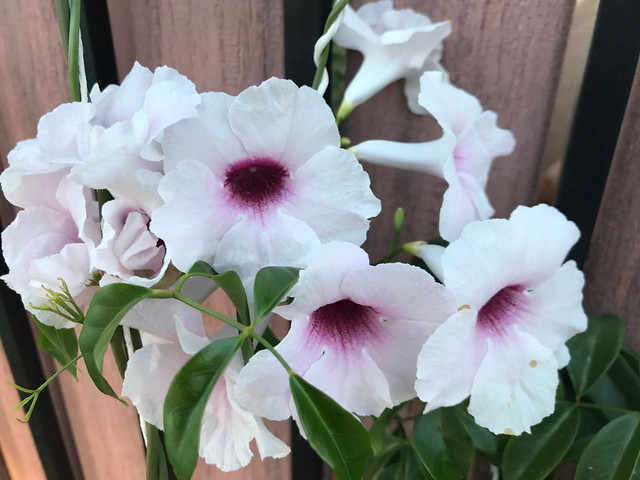
Flower of the Day: Impatiens or Vinca?

I’m not sure which.

More Flowers of the Day.

Posted in photography | Tagged , , | 1 Comment

Anti-Abortion Activists, Your Job Is Just Beginning

For the record, I am anti-abortion. I believe life starts at the moment of conception and that society has a responsibility to protect that life.

I just don’t think we need to write laws that prevent abortion.

Does that seem contradictory? Let me explain my logic.

We live in a society that views sex as a recreational activity with no limitations. Just turn on a television set if you don’t know what I mean. The idea of abstinence is shot down as ridiculous. I don’t agree that without abortion women are being forced to carry babies (except in the case of rape). If you consent to engage in an activity that is known to cause children, you shouldn’t be surprised if you become pregnant. Both men and women who don’t want to immediately become parents should practice birth control. It’s widely available and free in many places, although it has been known to fail occasionally.

Although some women’s reasons for having abortions seem frivolous (it’s a girl and we wanted a boy), many feel they have no choice. The timing of the pregnancy may mean financial hardship or lost opportunity. Let’s face it, having a little person depend on you for the next 18+ years means a large investment of time, energy, and money.

I hate to say it, but in the almost 50 years since Roe vs. Wade, abortion opponents have done very little to lessen the economic burden of raising children in this country. I have the horrible feeling that the people who are celebrating in the streets today are congratulating themselves that they got their cause through the Supreme Court without giving thought to what this will mean to women who find themselves inconveniently pregnant.

It’s not just their problem, it’s ours.

If we do nothing, more children in this country will grow up in poverty. The divide between the few rich and the many who are not will just grow.

There will be a baby boom, requiring better access to prenatal care and more obstetricians and birth centers. We will need more schools and better funding for them, and more teachers and other staffers who need to be paid a decent salary (which we have been failing to do in many places in the US, especially in my own state of Arizona). We will need better access to child care with good facilities and many more qualified caretakers, so that parents can afford to work. We will need more pediatricians and children’s hospitals. These need to be in place almost immediately. Oh, and it will cost money. Thank you so much, anti-abortion activists, for raising our tax bills.

Not that the government can or will provide all these things.

I am reminded of the African proverb: it takes a village to raise a child.

So I am asking you anti-abortion activists, do you just want everybody else to live by your high ethical standards, or do you really care about women and children and struggling families? Because you have an obligation to be part of the solution. Your activism is just getting started.

What can you do? Give. Give your money and yourself.

  • Give to organizations that help families in distress and need. In Arizona (and maybe in your state, too—check your state’s revenue department website to find out) there are state tax credits for donations to organizations like pregnancy centers, food banks, foster care and adoption support, public and private schools. They will cost you nothing (unless you exceed their limits, and shouldn’t you, since you care so much about the babies?), so you have no excuse not to take advantage of them.
  • If you are retired, why not befriend a neighbor with kids? Offer to care for their children during the period after school until the parents come home from work. Make them a snack. Help them with their homework. Play board games with them. You will be so blessed.
  • Plant a garden so that you can share your tomatoes, zucchinis, and flowers with families who are struggling to put food on the table. I’ll bet you can find someone in your own neighborhood who will really appreciate it.
  • When your own kids outgrow their clothes, look for someone who can use them. When our own children were growing up, people often helped us in this way. It was a lifesaver.
Posted in Abortion | Tagged , | 2 Comments

Scripture Break #34

Posted in Scripture | Leave a comment

Return to the Riparian Preserve

“Have you seen the spoonbill who lives here?” asked a man with a camera.

“No, I’ve never seen the spoonbill, but I see you’ve brought the big gun,” I said, pointing to the huge telephoto lens on his camera.

The Gilbert Riparian Preserve is a popular local venue for nature photographers. I posted about it in 2016 and 2017, but I hadn’t been back there since. One day last January, I drove to the 110 acre park that boasts a lake, seven ponds, hiking trails, a playground, and an observatory. I wasn’t expecting it to be so busy on a weekday; I was lucky to get a parking spot. The park was full of senior citizens and parents with young children. And also lots of ducks.

Water Ranch Lake
Lots of mallards

When I was a little girl, we’d go to the local pond with a bag of stale bread and tear it up to feed the ducks. Bread is no longer a recommended duck cuisine. At the Preserve, only at the lake (not at the ponds) are you allowed to feed the ducks, and only birdseed, corn, and whole-grain cereal are permitted. (Most people, like the kids above, bring baggies of Cheerios.)

I think this little house sparrow wants in on the Cheerio action.

Ring-necked ducks. See the white markings on their bills?

A turtle sunning himself

As I wandered around from pond to pond, I found lots of things to look at and wonder about.

A garden of saguaro cactus

No blossoms in this garden in January, but as I read the dedication, I realized it was planted in honor of a baby who died the day she was born.

Benches appear throughout the preserve. This one had a placard that particularly touched me:

In one of the ponds I noticed some wading birds fishing for food.

An American avocet. See the curved-upward beak?

A black-necked stilt

And further on, another turtle:

I noticed a painted rock nestled in the V of a tree trunk:

A gambrel’s quail sprinted across the trail in front of me, and I was barely able to snap a shot before it disappeared into the brush:

I won’t let another four-and-a-half years pass before I make another trip to the Preserve. Maybe I’ll see you there. . .

Posted in photography | Tagged , , , , | 1 Comment

My Ultimate Summer Day

What’s your favorite season? Mine hasn’t changed since I was a child growing up in New Jersey–summer! I associate that season with time off for fun. Our ten weeks of summer break was deeply needed after so many months cooped up in school.

I don’t like weather that involves raking or shoveling. Winter is enjoyable here in the Arizona desert, but I still like summer better, though in the 100+ degree heat, I’d prefer to be in the pool if I have to be outside.

My ideal summer day is based on the ones I experienced as a 15-year-old. The sky would be blue, the sun warm, the temperature in the mid-to-upper 80s (though with the typical 85% humidity, it would be much less comfortable than Arizona dry heat), and I would be at the beach. I’d have a cooler with me, with cold soda and sandwiches and snacks. I’d have no responsibilities for the day—no job to go to, no meals to prepare, no appointments upcoming, no pressing deadlines to meet. And I’d have a friend with me, preferably one of the opposite sex.

When our kids were little and we still lived in New Jersey, but closer to the Pennsylvania border rather than near the Atlantic shore, we might drive half an hour to a lake to have a change of pace from the backyard pool. But my ideal day still included sun and water.

When we moved to Arizona, we bought another house with a pool, because we knew it would play a big part in our summers. A lot of people don’t like having pools, because they see the upkeep as tedious and expensive. But we had five kids. Going on a one-week vacation during the summer would cost us more than the price of a year’s worth of pool chemicals. And really, if you invest in a good pool vacuum, maintenance only takes maybe an hour or less a week (assuming you don’t have trees dropping leaves directly into the pool). When the kids were young, we were in the pool every day. The kids’ birthday parties were always pool parties (except for Andy’s—he was born in December).

Now, with our kids all grown, we are not in the pool every day from April through October. Greg’s not been in the pool in years. I average about a dozen dips per summer, though every time I go in, I wonder why I don’t do it every day.

I’ve only been in once so far this year. But Monday is Memorial Day (which in New Jersey is considered the first day of beach season), so after meditating on the sacrifices of our Armed Services, I’m planning to cool off in the pool.

I can’t wait.

Posted in Uncategorized | Tagged , , | 3 Comments

11 Things to Do When You Have Nothing to Do

Or when you’re bored with what you have to do. Or if you ever get some free time.

  1. Read the books in your TBR pile. (If you’re not a bookaholic, you might not know that TBR means To Be Read.)
  2. Go somewhere fun to people-watch—a park, the mall (do people still go to malls?), a coffee shop, a bench downtown.
  3. Take a day trip to that nearby tourist trap you’ve never been to, or a museum, or a zoo, or a botanical garden, or a cathedral.
  4. Go on a hike, or on a walk around a neighborhood you’ve never been to. (Use your best judgment—in some towns, an unknown neighborhood is not a safe place to stroll.)
  5. See if you can find 20 things to photograph in your home, your backyard, or your apartment complex. Choose your artsiest photo, get it printed out as an 8 x 10, frame it and hang it on your wall (or give it as a gift).
  6. Doodle.
  7. If you’re a writer, daydream and/or brainstorm ideas. (If you’re a blogger, make up a list of prompts and send them to me! Or post it on your blog, and give us a link in the comments.)
  8. If you have CDs or records, look through them for ones you haven’t heard in a long time, and listen to them.
  9. Dig out your old clarinet, or accordion, or whatever instrument is under your bed gathering dust, and play it.
  10. Remember that needlepoint kit/ model car kit/ macramé project/ fancy recipe you were going to make? Work on that.
  11. Write a snail mail letter to a person you know who would appreciate it. (Hint: choose an older person, someone who thinks Facebook is newfangled.)
Posted in Uncategorized | Tagged | Leave a comment

Scripture Break #33

Posted in Scripture | Leave a comment