
Wonderful Christmas Quilts to Make
Wouldn’t it be great to have a Christmasy quilt to put on your bed for the holidays? Hey, you’ve got nearly a month to make that happen! Well, maybe for next year.
Many generous quilt designers post free patterns online. I’ve collected a baker’s dozen of some of the prettiest Christmas quilts on the web. Some are traditional, and some are more modern.
These quilts are from AllPeopleQuilt.com (Sorry, I was unable to copy the photos; you’ll have to click the links to see the beautiful pictures):
- Christmas Geese
- Patchwork Pines
- Deck the Halls
- Ruby Reds
- Twin Stars
- Festival of Trees
- Holly Jolly Christmas Quilt
From Amy Smart’s DiaryofaQuilter.com:
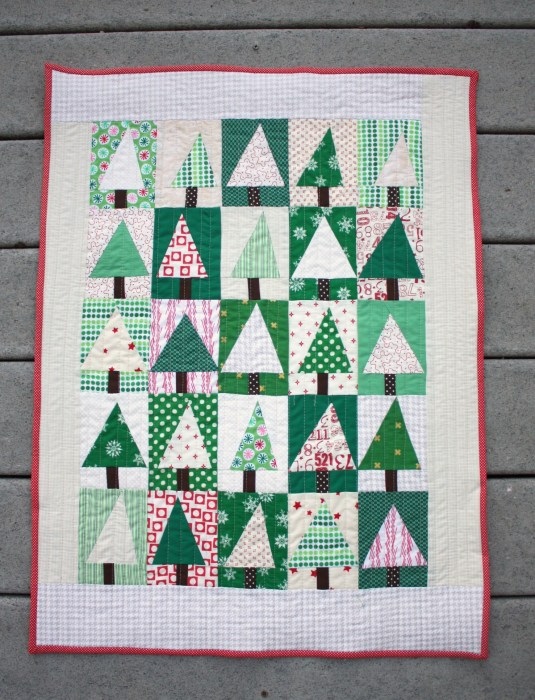
Modern Christmas Tree tutorial
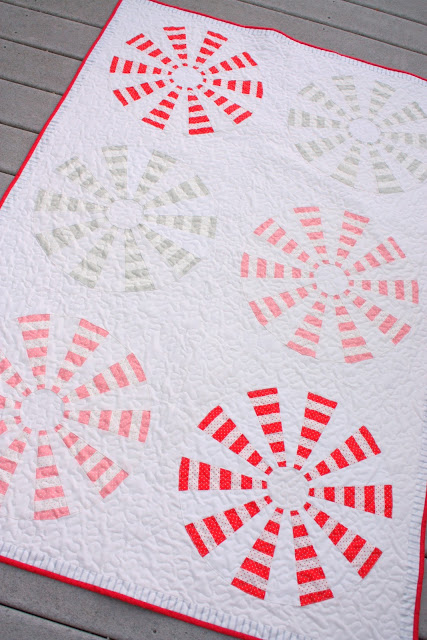
Peppermint Pinwheel tutorial. The directions are free, but you’ll need a Dresden Plate ruler (which is nice to have—I have one!)
From CluckCluckSew.com:
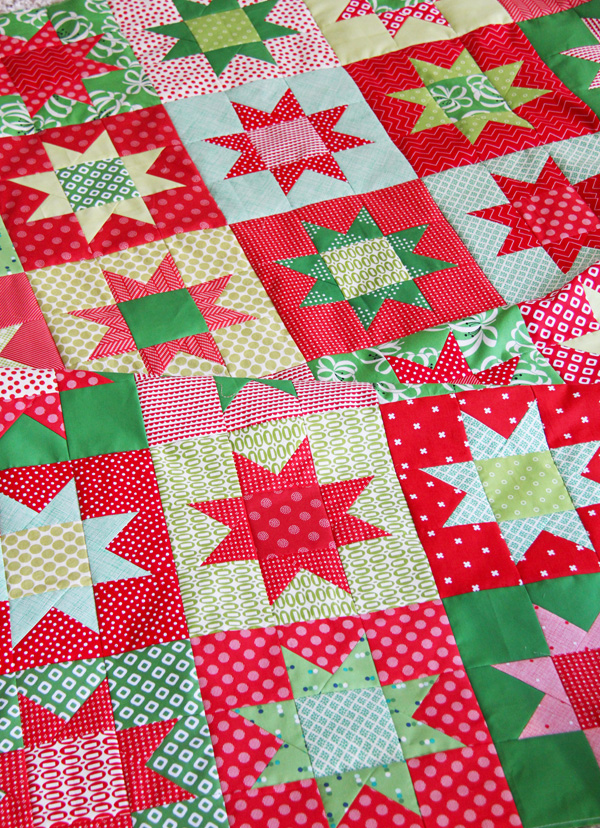
Found on Quilt Inspiration:
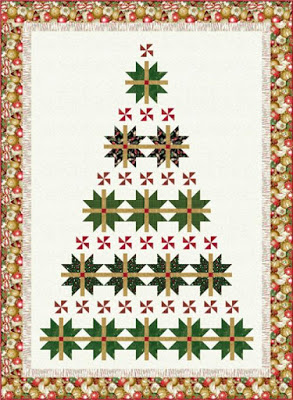
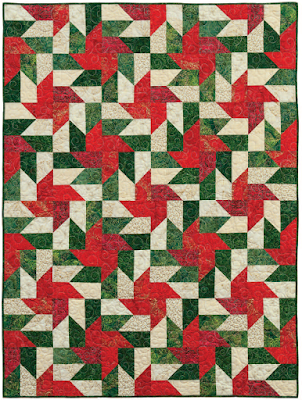
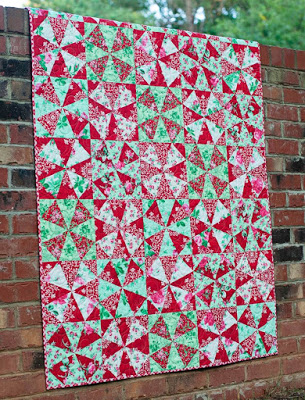
Can you keep a secret? I’m working on the Holly Jolly quilt; I won’t tell you for whom. I hope I can get it done in time to mail!
Philip Glass, Composer

In the 1970s when I was a young woman hearing Philip Glass’ music for the first time, I didn’t like it. The repetitiveness of it bored me, then bothered me.
That all changed on June 4, 2016, when a friend and I went to a Phoenix Symphony concert where Glass’ The Secret Agent was performed. I didn’t expect to like it. Instead, it was my favorite piece on the program, one that I frequently now seek out.
In researching today’s post, I read a fascinating and detailed article on Wikipedia. Rather than try to paraphrase it, I have pulled out a few interesting segments; if you want more information on Philip Glass, I direct you to that link above.
Philip Glass was born January 31, 1937. He is an accomplished pianist and one of the most influential American composers of the late 20th century through today. Glass’s work has been described as minimalism, being built up from repetitive phrases and shifting layers.
Glass founded the Philip Glass Ensemble, with which he still performs on keyboards.
You may just want this music playing in the background as you work today:
He was the son of Lithuanian-Jewish emigrants. His father owned a record store and his mother was a librarian. At the end of World War II his mother aided Jewish Holocaust survivors, inviting recent arrivals to America to stay at their home until they could find a job and a place to live. She developed a plan to help them learn English and acquire skills they would need for work.
Glass inherited his appreciation of music from his father, who often received promotional copies of new recordings at his music store. He spent many hours listening to them, developing his knowledge and taste in music. This openness to modern sounds affected Glass at an early age. He wrote in his memoir, “My father was self-taught, but he ended up having a very refined and rich knowledge of classical, chamber, and contemporary music. Typically he would come home and have dinner, and then sit in his armchair and listen to music until almost midnight. I caught on to this very early, and I would go and listen with him.”
Glass built a sizable record collection from the unsold records in his father’s store, including modern classical music such as Hindemith, Bartók, Schoenberg, Shostakovich and Western classical music including Beethoven’s string quartets and Schubert’s B♭ Piano Trio. Glass cites Schubert as a “big influence” growing up, his favorite composer, and by coincidence, shares his birthday with him.
At the age of 15, he entered an accelerated college program at the University of Chicago where he studied mathematics and philosophy. In Chicago he discovered the serialism of Anton Webern and composed a twelve-tone string trio. In 1954 Glass traveled to Paris, where he encountered the films of Jean Cocteau, which made a lasting impression on him. He visited artists’ studios and saw their work; he said, “the bohemian life you see in [Cocteau’s] Orphée was the life I … was attracted to, and those were the people I hung out with.”
Glass studied at the Juilliard School of Music where the keyboard was his main instrument. One of his fellow students was another favorite composer of mine, musical satirist Peter Schickele (aka PDQ Bach).
In 1964, Glass received a Fulbright Scholarship; his studies in Paris with the eminent composition teacher Nadia Boulanger, from autumn of 1964 to summer of 1966, influenced his work throughout his life, as the composer admitted in 1979: “The composers I studied with Boulanger are the people I still think about most—Bach and Mozart.”
His distinctive style arose in part from Ravi Shankar’s perception of rhythm in Indian music as being entirely additive. Glass renounced all his compositions in a moderately modern style resembling Milhaud’s, Aaron Copland’s, and Samuel Barber’s, and began writing pieces based on repetitive structures of Indian music and a sense of time influenced by Samuel Beckett.
Despite being an accomplished musician and composer, in the early years he did not completely support himself from his art. In addition to his music career, Glass had a moving company with his cousin, the sculptor Jene Highstein, and also worked as a plumber and cab driver (during 1973 to 1978). He remembers installing a dishwasher and looking up from his work to see an astonished Robert Hughes, Time magazine’s art critic, staring at him.
Though he finds the term minimalist inaccurate to describe his later work, Glass does accept this term for pieces up to and including Music in 12 Parts, excepting this last part which “was the end of minimalism” for Glass. As he pointed out: “I had worked for eight or nine years inventing a system, and now I’d written through it and come out the other end.” He now prefers to describe himself as a composer of “music with repetitive structures”.
Here is more music to run in the background as you work:
Glass composed his first violin concerto with his father in mind: “His favorite form was the violin concerto, and so I grew up listening to the Mendelssohn, the Paganini, the Brahms concertos. … So when I decided to write a violin concerto, I wanted to write one that my father would have liked.”
Philip Glass’ body of work includes numerous operas and musical theatre works, twelve symphonies, eleven concertos, eight string quartets and various other chamber music, and film scores. Three of his film scores, Kundun (1997), The Hours (2002), and Notes on a Scandal (2006), were nominated for Academy Awards; in 1998 he won the Golden Globe for best original score for The Truman Show.
Fun fact: Glass is the first cousin once removed of Ira Glass, host of the radio show This American Life.
When the Squirrels Won’t Stop Raiding your Birdfeeder
I know you don’t mind wasting 21 minutes. You will be so glad you watched this.
Hummingbird Habitat

I’m sharing some photos I took in September 2020 at the Hummingbird Habitat in Desert Breeze Park just a few miles south of my house.
I love parks. Desert Breeze has a lot of nice features. There’s a lake for urban fishing. There’s a little train. (One evening around Christmas many years ago we took the kids for a train ride around the holiday-lit park and then drank hot cocoa.) There’s a playground with a splash pad where kids can cool off from the heat.
The park is four acres, and I didn’t know exactly where the hummingbird garden is. The first parking lot I pulled into was next to the lake. I didn’t see anything that could be a hummingbird garden.
The next lot I visited was next to the train station. I could see tennis courts and the playground. I parked the car and looked for a directory to show me the way to the hummingbird habitat. I found none, so I started walking. How far could it be?
Besides the kids in the playground, I saw groundskeepers striding around and people jogging, but instead of flagging them down, I kept my social distance. With no idea where to go, I took out my phone and looked for a map of the park. Why didn’t I do that when I first got to the park? Well, I tried, and I asked Siri for help, but I was new to smart phones and I didn’t know what I was doing. I managed to find a map, and tried to enlarge it. An annoying little dialog box kept popping up saying “Chandler Parks wants to know your location” and I clicked “Don’t Allow” several times while trying to get my bearings. Finally, I clicked “Allow,” and a dot appeared on the map. As I took a couple of steps trying to determine where I was on the map, the dot moved. The dot was me! Who knew?
Then it was a snap to walk to the Hummingbird Habitat. Too bad I’d walked in all the wrong directions. I would never have found it without GPS. But my efforts were so worth it.

There’s an archway with a giant hummingbird at the entrance to the habitat. And just inside is a pond complete with waterlilies and a little waterfall.


A giant tree sculpture with a circular bench offers a place to sit.

There are lots of live trees, too.

And other plants.


Unfortunately, I didn’t see a single hummingbird. It was already nearly noon (this is Arizona, where September temperatures often reach 100+ degrees), so I suspect the birds were resting wherever they could find shade.
Next time I’ll go earlier. Or later.
Pandemic Playlist
Last year, Norm Frampton of the popular blog Norm 2.0 tweeted:
If 2020 had a soundtrack I’m pretty sure it would be some ominous sounding Gregorian Chants.
I think he’s on to something.
I put together a playlist inspired by the Covid-19 pandemic. In Norm’s honor, let’s start out with some ominous Gregorian chant.
The next selection poses the question we’ve all been asking for the last seven months. What’s Going On?
One of the dreaded symptoms: Fever
Covid-19 prevention strategies:
Self-quarantine
Wash your hands
Mask up
Social distancing
Remember that Covid-19 can be fatal. Danse Macabre (Dance of Death):
In memory of our loved ones who have passed away during the pandemic. Samuel Barber: Adagio for Strings
Sigh. Hopefully this pandemic will end soon.
Now it’s your turn. What songs would you include in your own personal pandemic playlist? Share in the comments below.
Ways that Technology has Changed the Writing Profession
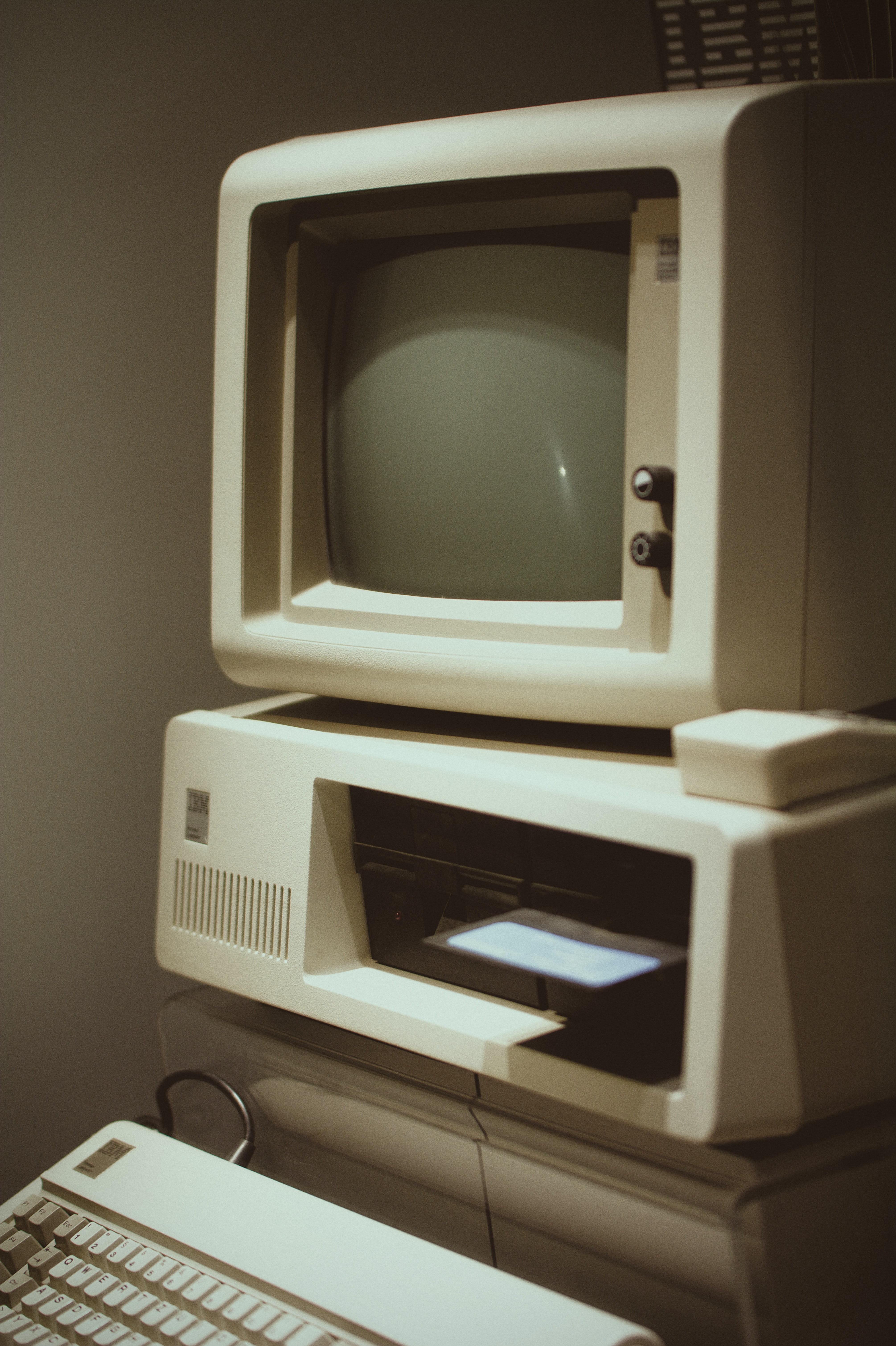
Technology is both a blessing and a curse. Technological advances have effected every occupation, and writing is no exception.
From typewriter to computer
When I started freelance writing in the early 1990s, I wrote my drafts by hand either in notebooks or on loose-leaf paper, and when I was satisfied with my final draft, I typed it out. That sounds easier than it actually was. I was a terrible typist: I rarely had only one error per page, and retyping the page didn’t guarantee I’d have fewer mistakes.
Personal computers were just becoming a thing, and they were expensive. Instead, I bought a word processor, which worked fine for me, but one of my editors preferred to get manuscripts via floppy disc, so we eventually bit the bullet and bought a computer. This was a bare-bones Mac with no internet capability. Now every few years we upgrade (kicking and screaming) to a more current machine. I currently use a year-old MacBookAir recently updated to Big Sur.

From snail mail to email or other electronic forms
In the old days, I had to mail my manuscripts, enclosing a self-addressed, stamped envelope for the reply and/or return of my manuscript. (No SASE, no response. Otherwise, you got some sort of acknowledgement, although you might have to wait six months for it.)
Now, virtually no one wants to deal with paper. Which is alright by me. But I am offended that so few agents and editors respond to a submission. They tell you upfront in their contact info that they are too busy. (In contrast to writers, who have nothing but time.)
From hard copy books to e-books
Electronic books were supposed to make hard copies obsolete. Instead, they are a purchasing option. Most books come out in both formats, and most readers buy some reads as e-books and others as hard copies.
And access to low-cost e-book production means that authors whose work isn’t snatched up by a traditional publisher can self-publish much more affordably than they used to (though it takes a lot of study to learn how to do it yourself).

From publisher-sponsored publicity to the rise of author websites, blogs, and social media
Once upon a time, the publishing house had a small promotional budget for even their unknown authors. Nowadays, unless you’re Stephen King or a Washington insider writing a Trump exposé, you get zip. You’re responsible for creating your own buzz. You’ve got to be an influencer, or know a few. You’ve got to blog, or at least have a good-looking author website. You’ve got to be on Facebook, Twitter, Instagram, TikTok, and whatever social media launched five minutes ago. Some publishers want to see how many followers you have before they even read your proposal.
Though I admit technology has made some aspects of my life easier—Google means I can do research without even leaving my home!—there are some things about the old days that I miss, such as getting a mailed acknowledgement of my submission, even a rejection slip.
Tchaikovsky
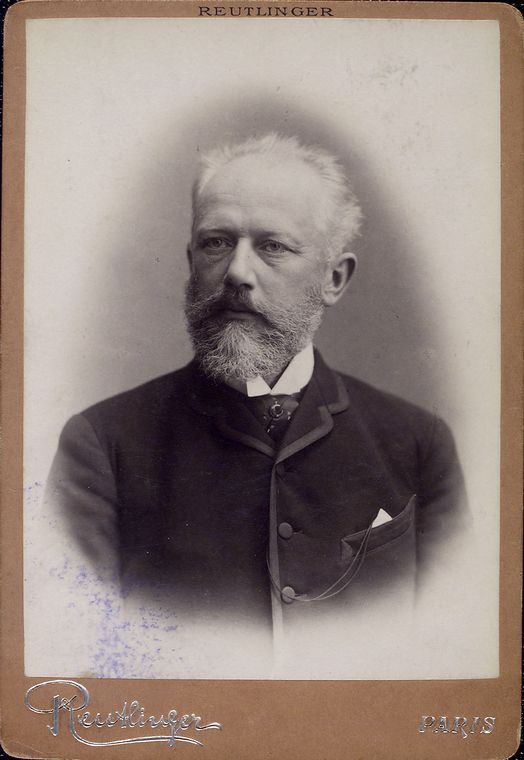
Pyotr Ilyich Tchaikovsky (May 7, 1840—November 6, 1893) was the first Russian composer to achieve international recognition.
Though musical from a young age, his parents encouraged him to study law so that he could enter the more lucrative profession of civil service. To please them, he spent nine years at the Imperial School of Jurisprudence, and worked in the Ministry of Justice for four years while studying music on the side. In 1863, he resigned from civil service and became a professor of harmony at the Moscow Conservatory.
Tchaikovsky was greatly influenced by Russian folk music, but also by the Western music he studied while at the St. Petersburg Conservatory.
In 1876, Nadezhda von Meck, the widow of a wealthy railroad magnate and an admirer of Tchaikovsky’s music, offered to become his patron. She provided him with a monthly stipend which allowed him to resign from his professorship in 1878 and pursue composition full time. Her only requirement was that they never meet in person. They did, however, maintain an extensive intellectual correspondence that documents their views on topics from religion to politics to creativity.
Tchaikovsky’s body of work includes 169 pieces, including 7 symphonies, 11 operas, 3 ballets, 5 suites, 3 piano concertos, a violin concerto, 11 overtures and single-movement orchestral works, 4 cantatas, 20 choral works, 3 string quartets, a string sextet, and more than 100 songs and piano pieces. Among his most beloved works are his three ballets (Swan Lake, The Nutcracker, and Sleeping Beauty), his Piano Concerto No. 1, the opera Eugene Onegin, and the 1812 Overture.
This sweet little hymn for piano is one of my favorites:
You can learn more about Tchaikovsky at Encyclopaedia Britannica and Biography.
Thank You for the Fish
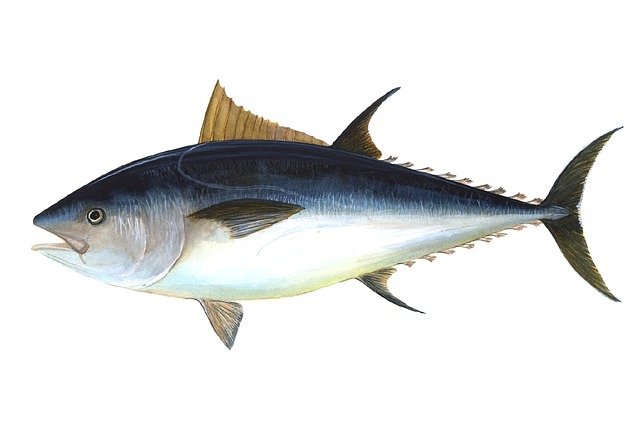
The other day, I made tuna salad for lunch. Just a can of tuna, a tablespoon of mayonnaise, some chopped sweet onion, and a sprinkle of salt and a dash of pepper. No bread, just straight out of the bowl. It tasted so delicious, so satisfying. My heart said, Dear God, thank You for the fish.
Then I chuckled. How strange to thank God for the fish—it wasn’t like I caught it all by myself. So I continued, Thank you for the fisherman. I’ve seen enough episodes of Wicked Tuna that I know catching a tuna is no easy feat.
But I didn’t get the fish from the fisherman. So I said, Thank you for the factory workers who cleaned and prepared the fish and canned it.
But that wasn’t enough, either. So I added, Thank you for the truckers who transported the fish to the warehouse. Thank you for the stockers who put it on the shelves of the grocery store. Thank you for the cashier who rang up my grocery order. Thank you for the employee who put my purchases in the trunk of my car.
God used my simple lunch to remind me that whatever work a person does, it’s a holy occupation that He uses to bless the children He loves (all of us!). Every job has importance and value and dignity. Even if it’s not glamorous. Even if it’s backbreaking. Our work is one way we honor God and serve each other.
Dear God, thank you for your bounty, and thank you for the laborers who distribute it. Amen.
 Allison Boley
 Carol Boley
 dgood648
 Joy
Joy Andrea R Huelsenbeck
 Betty Mason Arthurs
 Linda Carlblom
 Peggy Levesque
 tuesdayschildren100
 Judy Robertson
 Doing Life Together