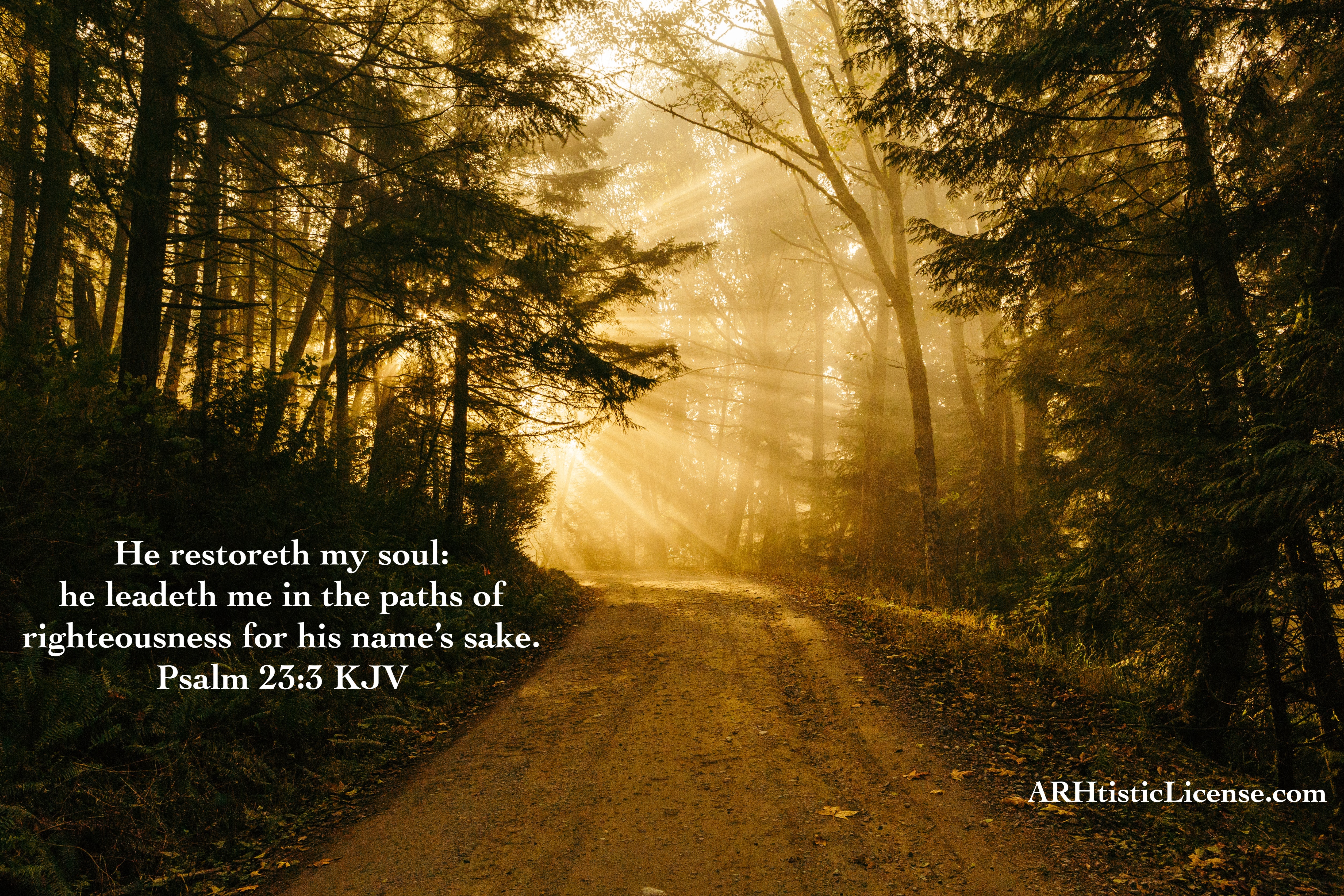
In my Father’s House are many dwelling places; if not, I would have told you. I am going away to prepare a place for you. If I go away and prepare a place for you, I will come back and receive you to Myself so that where I am you may be also (John 14:2-3 HCSB).
Sometime in 1978, my mother-in-law (whom I called Mom), a pack-a-day smoker for more than 40 years, discovered she had lung cancer. Whenever we asked her about her prognosis, she said, “I have to see the doctor again in two weeks.”
When Carly was born in April, 1979, my mother- and father-in-law came to the hospital to see her. We got together a few weeks later, and they both were able to hold her.
Then, in June, Greg’s dad had a heart attack.
Greg’s mom called to tell us. Greg immediately wanted to drive over to visit him in the hospital (a one-hour trip each way), but Mom said, “The doctor said don’t come; there’s nothing you can do for him.” Greg told her we’d come to see them on Sunday, Father’s Day.
A few days later, Mom called again to say, “You might want to come to see your dad.” Greg said, “We’ll be over Sunday.” He assumed that would be soon enough.
Greg’s dad died the next day.
Greg’s biggest regret is that he didn’t follow his first impulse and go to the hospital when he first learned about the heart attack, despite what the doctor said.
Over the next months, we visited Greg’s mom every weekend. Sometimes I’d hear her say to herself, “Wil (Greg’s father), how could you do this to me?” Greg mowed the lawn, we had dinner together, I washed the dishes, and we did whatever we could to help. Mom was still driving to the supermarket on her own, although she limited her purchases to one bagful, which was as much as she had the strength to carry.
Whenever we asked about her health, she said, “I have to see the doctor again next week.”
Because she was seeing the doctor on a regular basis, I assumed she was getting treatment. I also assumed she’d get better.
Meanwhile, Carly grew. She took her first steps on Grandma’s screened-in front porch, where we often sat while we visited.
It turned out Mom refused treatment. The cancer was going to kill her. But I didn’t really understand or believe it. I knew she was weaker, but she didn’t seem like she was dying.
Then, one day, Greg came to me with a proposition. Mom had asked if we’d move in with her. She wanted me to be her caretaker.
I was a stay-at-home mom. I wanted to give my full attention to taking care of Carly. I didn’t want to spend her childhood pulled in two directions. Greg said it was totally my decision. I said no.
So my mother-in-law went to a care center next to the hospital. I went to visit her once a week. Mom said, “Don’t bring the baby. I don’t want her to see me with all these tubes stuck in me.”
I brought Carly anyway. Carly didn’t notice the tubes; all she saw was her Grandma. In fact, it was in the care center that Carly called her “Grandma” for the first time.
Greg spent time with his mom whenever he could. He was there with her four weeks later when she passed away.
Four weeks. That’s all.
I didn’t really process this experience until more than twenty years later, when my brother was caring for our ailing parents. He put his life on hold for them–for fourteen years.
I was 27 when I made my decision not to care for my mother-in-law. I really didn’t have a model for elder caretaking. I didn’t observe my parents doing it for their own parents. I was young and stupid.
I was also somewhat in denial about what Mom was going through. I wish someone had sat down with me and told me that the end was near. I still thought she could get better. I thought she had years before she would die. I was so blind. If someone had told me my services would be needed for a few weeks, I could easily have done that, even with a toddler.
It is my life’s biggest regret, and it haunts me every day.
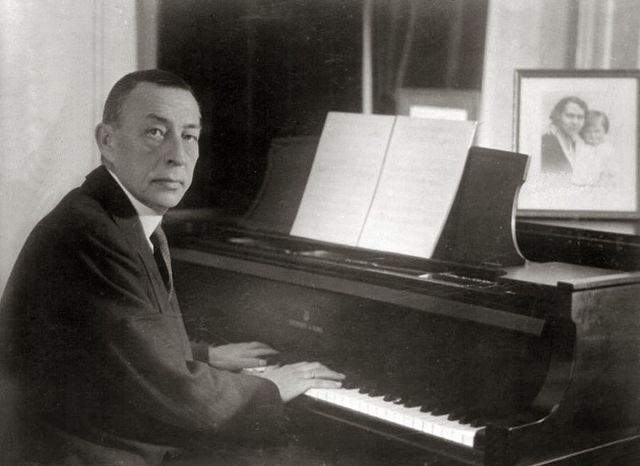
Sergei Vasilievich Rachmaninoff (Russian, 1873–1943) lived well into the 20th century, but his compositions are unabashedly Romantic. He started learning the piano at age 4 and graduated from Moscow Conservatory in 1892. Rachmaninoff’s Prelude in C-sharp minor that he wrote at age 19 became a worldwide hit (and remains a staple of piano repertoire even today). Sadly, that prelude overshadowed much of his early music, and a lack of copyright agreements between Russia and the West meant that Rachmaninoff earned little from its popularity across Europe and the U.S.
Rachmaninoff’s Choral Symphony, The Bells, Opus 35, which premiered in 1913, inspired by the poem by Edgar Allen Poe:
Rachmaninoff premiered his first symphony in 1897, but it was not well-received. Its failure launched him into a three-year depression and writer’s block. However, in 1901, his Piano Concerto No. 2 — which was dedicated to the hypnotherapist who helped him recover — brought him much success and made him a composing and performing phenomenon.
Rachmaninoff’s early body of work included a successful Symphony No. 2 and two piano trios, the beautiful Trios élégiaque, some deeply Russian choral works, many songs and three operas, as well as major sets of variations on themes by Chopin and Corelli for solo piano, plus two books of Etudes-Tableaux.
Political turmoil in Russia spurred Rachmaninoff to travel to the West in the early 1900s. He first toured the U.S. in 1909-10, performing his Third Piano Concerto in New York under Gustav Mahler. (Famous for its complexity and difficulty, this still-popular concert piece was central to the plot of Shine, the 1997 movie about the emotionally-devastated pianist David Helfgott.)
Rachmaninoff emigrated after the Russian Revolution of 1917, eventually settling in the U.S., where he was in demand as both a conductor and a pianist. His virtuosity, impressive stature, large hands and a near-photographic memory gave him a commanding stage presence.
Because Rachmaninoff lived and performed until 1943, we have many recordings of his playing — piano rolls, acoustic discs, electrical recordings. He recorded hit versions of his four piano concertos with the Philadelphia Orchestra (under Leopold Stokowski and Eugene Ormandy), along with conducting the orchestra himself in his Third Symphony, great tone poem Isle of the Dead and popular Vocalise. He also recorded performances of Beethoven, Schubert, Grieg, Mendelssohn, Schumann, Chopin, Tchaikovsky, Rimsky-Korsakov and Scriabin.
He holds a well-deserved reputation for being one of the greatest pianists and composers who ever lived.
The author’s voice, for one thing. If a post engages me, it’s often because I feel like I’m connecting with a friend, someone who shares my interests and is willing to discuss them with me. It also helps if he/she has a sense of humor and a mostly positive attitude.
The quality of the writing. I’m disappointed with sloppy spelling and grammar. I like to learn something new, so I’m always on the lookout for great content.
Consistency. Stuff happens, and it’s really hard to post something every day or even every week. But I love it when my favorite blogs come through as expected. When a blogger goes off the grid for months at a time, it’s like being ignored by a former BFF. Medical emergencies and family obligations are acceptable reasons to be inactive, but if intend to take a blogging vacation, please let your readers know (so I don’t worry about you or wonder if it’s something I said or did that made you ghost me).
That said, the following blogs meet or exceed my high standards.
My Top 10 Favorite Blogs (in no particular order):
My OBT stands for My One Beautiful Thing, something Donna Kramer is determined to find anew every day. That doesn’t mean she can’t get a little snarky, like when oddities surface in her weekly Thursday Etsomnia™ post.
Life Lessons. Judy Dykstra Brown is an artist, photographer, and extraordinary poet. I think I discovered her when I began participating in photography and poetry challenges. When I interviewed her for ARHtistic License, she was so generous with her time and her stories that I had to split her profile into two sections, Part I and Part II.
Travel with me. I hardly get to travel, so I do it vicariously through this blog. Toonsarah is an excellent photographer.
Allison Marie. Allison grew up on a farm. She loves animals and art and music. She is also a fantastic photographer, as you can see in this post featuring an ocean sunrise. Just browse. It’s a feast for your eyes.
Sketch Away. I love Suhita Shirodkar’s style of urban sketching.
Time for Tangling. Linda posts an incredible Zentangle tile several days a week and tells where she found her inspiration.
Cee’s Photo Challenges. Cee Neuner has almost 11,750 followers. It is not unusual for one of her posts to have over 100 likes. She’s an awesome photographer, and she’s generous with hints to make you a better photographer too. She runs four photo challenges, including the beloved Flower of the Day. Her blog is also a clearinghouse for other photo and writing challenges, so if you’re looking for inspiration, check her out.
A Writer’s Path. Ryan Lanz shares his writing expertise and also that of other writers. (I’m also a contributor.) Every writing topic imaginable gets covered from a variety of angles. Excellent writing blog. Followed by over 29,000 readers.
Folk Dance Musings. Andrew Carnie is very active in the Tucson area folk dance scene. His blog contains directions for hundreds, maybe thousands of dances from all over the world. He often knows who the original choreographer was and can give historic and stylistic background on the dances. The directions are often accompanied by videos. When I write an “I’d Rather Be Dancing” article, his blog is the first place I go for research. I also rely on his directions when I’m asked to lead or teach a dance.
Your Classical is actually not a blog but a radio station website devoted to classical music. I signed up for their daily download feature, but it’s so much more. There are streaming playlists and stories and musical podcasts. If you like classical music, you’ve got to bookmark it. Have it playing in the background whenever you’re working on your computer.
Now it’s your turn. In your opinion, what does it take for a blog to achieve excellence? What are some of your favorite blogs? If you’ve blogged about this topic, feel free to add a link in the comments below.
I don’t know about you, but my life has become very complicated. Since Covid, my life revolves around taking care of my semi-disabled husband. I don’t go anywhere, except his doctor and physical therapy appointments, and quick trips to the grocery or hardware store.
I blame technology. Or it may be that I’ve just gotten too old.
To avoid having to navigate the grocery store, I’ve been ordering my purchases online and then picking them up. (Although my husband misses the supermarket. He sometimes makes me take him there for an outing.)
We both have been ordering things we need on Amazon, although Greg usually needs my help with anything involving the computer.
Is it just me, or is anything having to do with healthcare complicated now? Making a doctor appointment often involves being on hold for half an hour. And then you have to go to a patient portal to fill out paperwork. And my day is constantly interrupted by automated messages asking me to confirm appointments. And trying to get a refill of a prescription is a nightmare. Everything is automated, with lots of unnecessary steps being repeated over and over. Somehow, the prescriptions never make it from my doctor’s office to the pharmacy on the first try. And the prescriptions aren’t ready when they’re promised. Arrgghh!
I’ve been trying to figure out how to simplify my life. What does a simple life look like? How do I get there?
This is what I’ve come up with so far:
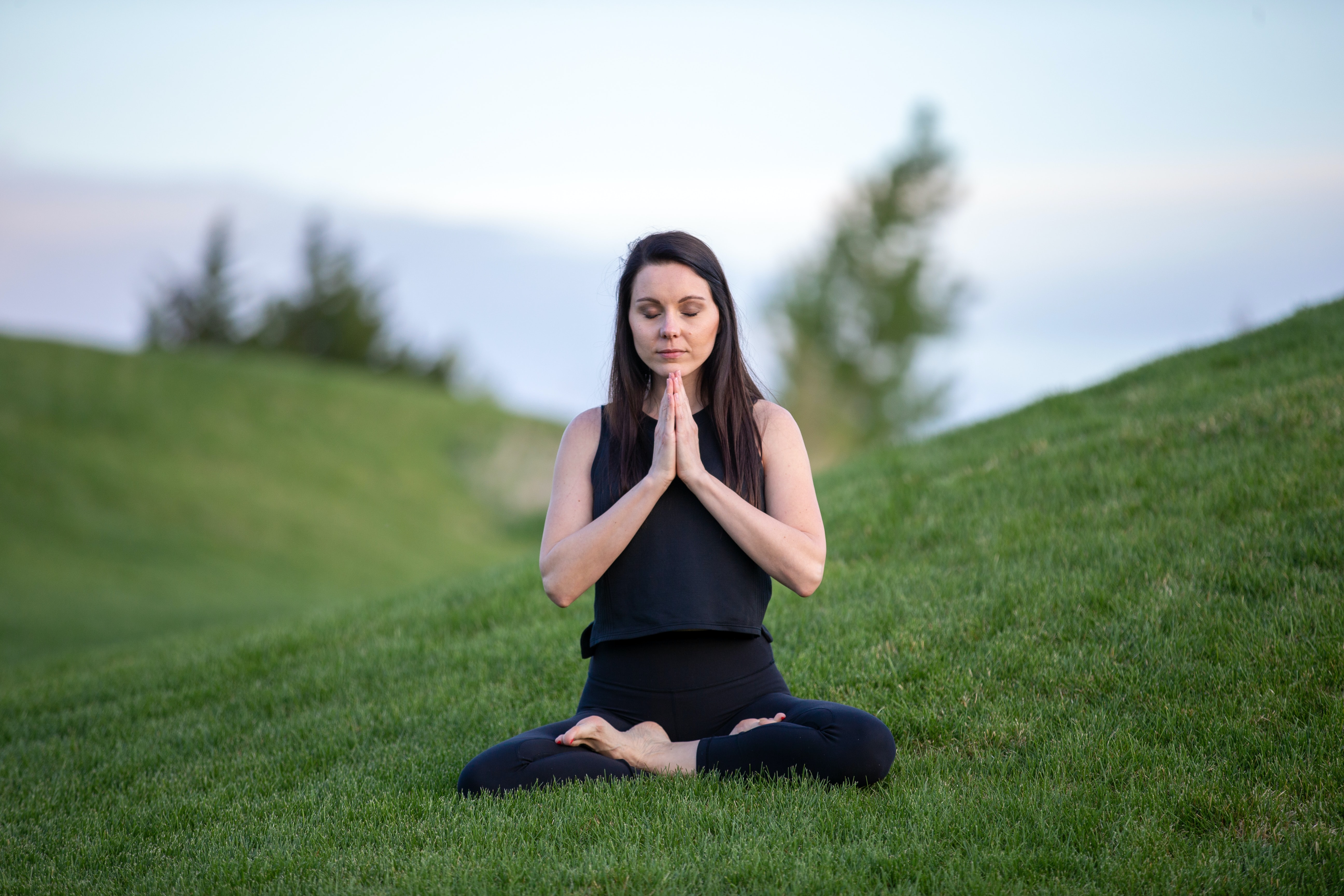
Pray every day, every hour, every minute.
Don’t ever get sick.
Laugh.
Drink lots of water.
Eat lots of vegetables.
Walk a mile every day. While you’re walking, notice things that are beautiful. Smile at the people who are walking dogs or accompanying children or working in their yards.
Stay single. (Oops. Too late for me. Maybe for you too.)
Don’t have kids. (Oops. Also too late for me.)
Be selective about who you give your phone number and/or email to.
If you live in a small town, consider staying there for the rest of your life.
Stay away from social media. (Yeah, big talk for a blogging lady.)
Don’t acquire lots of stuff.
Give away your stuff. Keep only those things you use and/or love. When your living area gets cluttered, give away more stuff.
If you can’t get by on public transportation, buy a really good used car, if you can find one. Not a flashy or expensive car. By good, I mean a reliable car that will get you from point A to point B. Not red. One or two years old, with as low mileage as you can find (under 15,000, if possible) and keep up with maintenance. Then drive it for about 200,000 miles or 15 years, whichever comes first.
Find two or three people whom you really like, people who are smarter and kinder than you. Cultivate them as friends. Keep in touch with them. Get together often. Learn as much as you can from them. Every few years, add one more person like that to your circle.
Despite point #7, it does really help to have someone you love. Maybe pick someone from point #15 to marry.
That’s the best I can come up with.
Now it’s your turn, dear reader. What did I miss? What are your best strategies for simplifying your life? Share in the comments below.
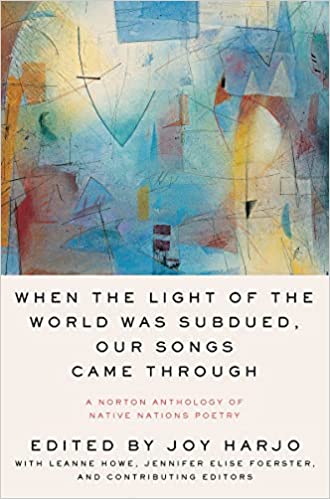
Joy Harjo is a former Poet Laureate of the United States. She started this project before she took on the office. (She has since edited a second such anthology.) She was ably assisted by associate editors, contributing editors, and regional advisors. It is a huge undertaking, gathering together the work of 161 poets, representing 100 indigenous nations (out of 573 federally recognized tribal nations), containing more than more than 240 poems. But there is so much more—commentary about native culture and history; bios of the individual poets. It took me a long time (eight months) to read the 425 pages, and I fully intend to reread it several more times.
The book is full of pain, but also tradition, spirituality, beauty, wonder, diversity, respect for nature, and even some humor. I learned a lot. The book deserves pondering. North American indigenous peoples have a long literary history. “The earliest recorded written by a Native person was composed as an elegy by ‘Eleazar,’ a senior at Harvard College in 1678,” but there was a rich oral tradition before then.
I didn’t obtain permissions to reprint any of these poems, but I have located online some of the ones that moved me. I include these links and videos below so you can determine if you might want to read this book yourself.




 Allison Boley
 Carol Boley
 dgood648
 Joy
Joy Andrea R Huelsenbeck
 Betty Mason Arthurs
 Linda Carlblom
 Peggy Levesque
 tuesdayschildren100
 Judy Robertson
 Doing Life Together